After the plebiscite
After the vote, the Allies failed to agree on a common border proposal. The plan to leave most of the industrial district to Germany was especially adverse to the Polish side. Korfanty decided to use armed action to exert pressure on the international settlement.
Sources for this passage
- Ideas for the Division of Upper Silesia After the PlebiscitePartition plans: final paragraphs; Third: Czas niepewności and Przygotowania
- Plebiscyt i III Powstanie Śląskie 1921 rokuPartition plans: final paragraphs; Third: Czas niepewności and Przygotowania
The German camp invoked the overall majority, while Korfanty pointed to commune majorities within his proposed Polish sector. His line was a political proposal, not a border automatically established by the vote. The British–Italian Percival–de Marinis line was likewise a proposal, not the final partition.
Sources for this passage
- Ideas for the Division of Upper Silesia After the PlebiscitePolitical responses and Allied proposals
Preparations for fighting
The Polish forces were organised through the Plebiscite Defence Command, developed after earlier underground structures had formally been dissolved. Assistance from Poland included weapons, equipment and personnel. The government’s public caution did not exclude involvement by Polish military structures.
Sources for this passage
- Plebiscyt i III Powstanie Śląskie 1921 rokuThird: Przygotowania; biography: Dyktator powstania
- Ślązak i Polak Wojciech Korfanty (1873–1939)Third: Przygotowania; biography: Dyktator powstania
The night of 2–3 May. Operation Bridges
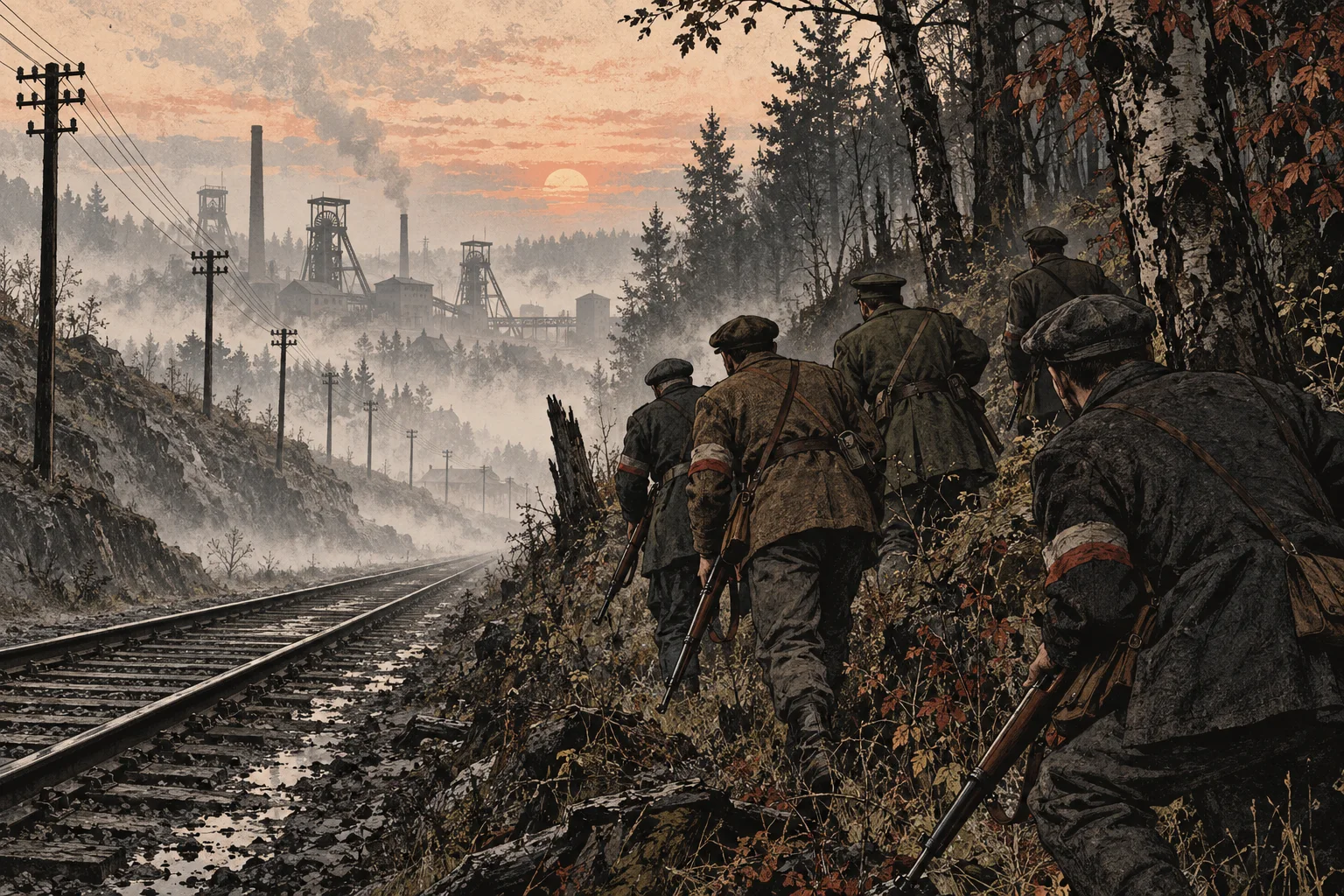
The Third Uprising began during the night of 2–3 May 1921. Operation Bridges, carried out by the group led by Tadeusz Puszczyński under the pseudonym Konrad Wawelberg, aimed to sever transport links with Germany. Railway disruption was intended to hinder German reinforcements.
Sources for this passage
- Plebiscyt i III Powstanie Śląskie 1921 rokuPoczątek insurekcji i siły polskie
Political and military leaders
As the uprising’s dictator, Korfanty headed the civilian authorities. Maciej Mielżyński assumed military command and was later replaced by Kazimierz Zenkteler. Headquarters were in Szopienice. Insurgent forces were organised into North, East and South groups.
Sources for this passage
- Plebiscyt i III Powstanie Śląskie 1921 rokuPoczątek insurekcji i siły polskie; command change
- Kazimierz Zenkteler „Warwas”Paragraph on June 1921 command appointment
German underground and volunteer structures developed into the Selbstschutz Oberschlesiens. Its ranks included locals and volunteers from elsewhere in Germany, including Freikorps members. General Karl Hoefer took overall command. Both sides benefited from support originating outside the plebiscite territory.
Sources for this passage
- Plebiscyt i III Powstanie Śląskie 1921 rokuSiły niemieckie; II etap walk
The opening offensive
In the first days the insurgents seized substantial industrial areas. Allied interventions forced them out of some larger towns, including Bytom and Katowice, which were occupied by Allied garrisons.
Sources for this passage
- Plebiscyt i III Powstanie Śląskie 1921 rokuI etap walk: urban occupations and Allied interventions
Between 6 and 10 May 1921 insurgent forces fought for Kędzierzyn and its important railway junction. They had taken the area by 10 May. Kędzierzyn became a battleground again during the German offensive in June. Control of transport was an important dimension of the conflict.
Sources for this passage
- Plebiscyt i III Powstanie Śląskie 1921 rokuI etap walk; III etap walk
Góra Świętej Anny / Annaberg
Góra Świętej Anny, called Annaberg in German sources, was a major focus of fighting in May 1921. The detailed IPN chronology dates the German offensive and capture of the hill to 21 May. Insurgent counterattacks failed to recover it. This local German success did not amount to control of the whole industrial district.
DHM gives 23 May. The timeline follows the detailed IPN account while retaining the discrepancy.
Sources for this passage
- Plebiscyt i III Powstanie Śląskie 1921 rokuThird: III etap walk; DHM: Annaberg paragraph
- Die Teilung OberschlesiensThird: III etap walk; DHM: Annaberg paragraph
Three Allied powers
The Allies were not a single political bloc. France was more receptive to Polish demands; Britain and Italy supported different partition proposals. On the ground Allied troops protected garrisons and attempted to restrain operations. At Rybnik insurgents also clashed with Italian troops.
Sources for this passage
- Plebiscyt i III Powstanie Śląskie 1921 rokuThird: I etap walk; partition proposals
- Ideas for the Division of Upper Silesia After the PlebisciteThird: I etap walk; partition proposals
Inhabitants during the conflict
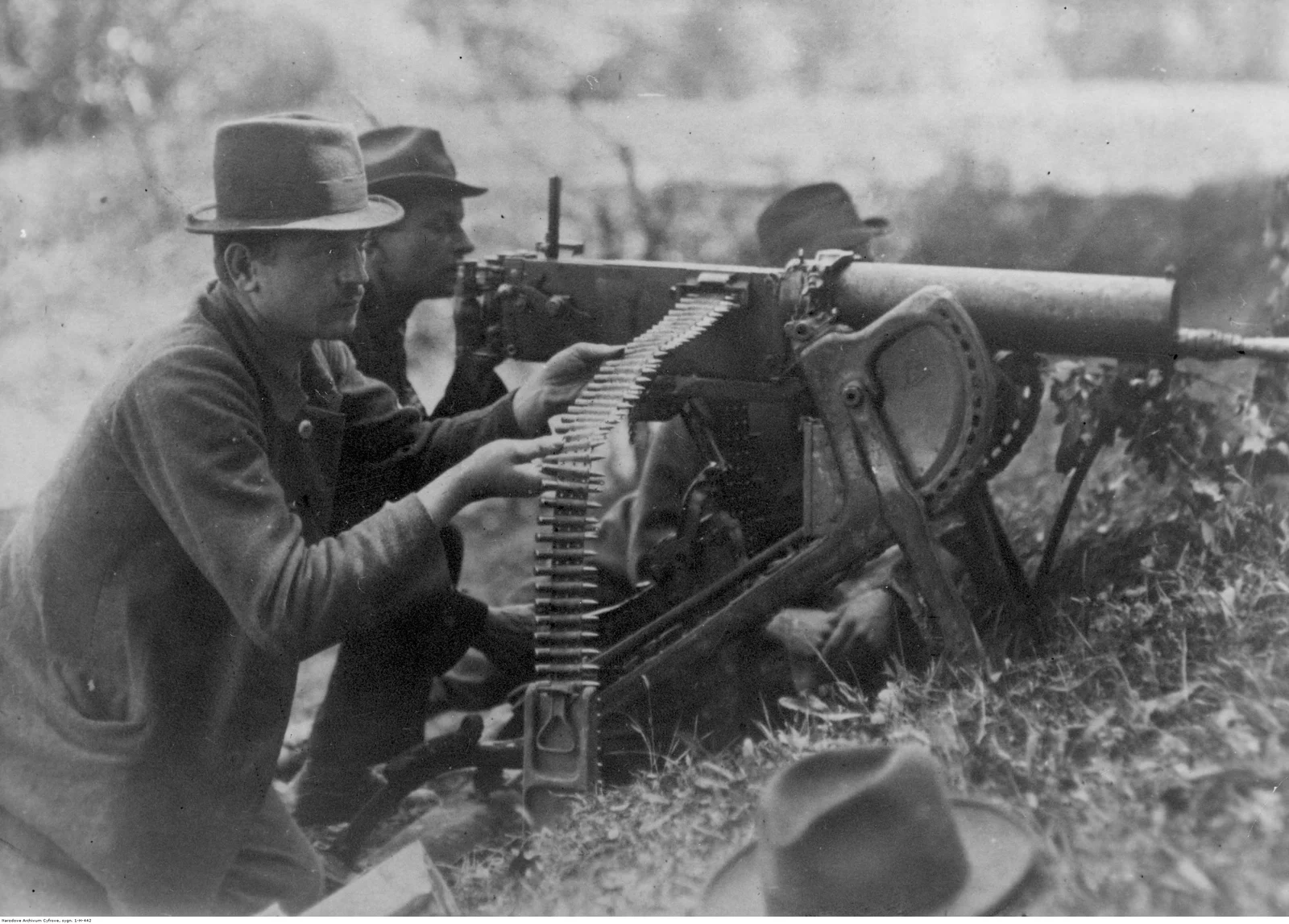
The fighting also affected everyday life: strikes, displacement, violence against civilians and interruptions to work accompanied the conflict. Surviving photographs and recollections show individual experiences, though they do not provide a complete picture of every family’s life.
Editorial synthesis of the sources’ scope; no comprehensive civilian casualty count.
Sources for this passage
- I powstanie śląskie (1919 r.) – okoliczności wybuchuCivilian consequences and strikes across the three accounts
- II Powstanie ŚląskieCivilian consequences and strikes across the three accounts
- Plebiscyt i III Powstanie Śląskie 1921 rokuCivilian consequences and strikes across the three accounts
Disagreement over ending the fighting
Attempts to end the fighting caused disputes among the uprising’s leaders. In late May and early June a command crisis developed, and some East Group officers challenged Korfanty. The political aim of pressuring the Allies did not always align with commanders’ expectations of further military action.
Sources for this passage
- Plebiscyt i III Powstanie Śląskie 1921 rokuIII etap walk: leadership crisis
Ceasefire and evacuation
The Third Uprising ended through negotiations and withdrawal. On 25 June 1921 the German side signed an evacuation agreement. Forces on both sides withdrew between 28 June and 5 July. Thus 5 July marks completion of evacuation, not a single all-purpose ceasefire date.
Sources for this passage
- Plebiscyt i III Powstanie Śląskie 1921 rokuThird: evacuation paragraph; leaflet p. 2
- Powstania śląskie 1919–1921: exhibition leafletThird: evacuation paragraph; leaflet p. 2
The partition decision
The partition dispute was referred to the League of Nations. Its recommendation formed the basis of the settlement approved by the Conference of Ambassadors on 20 October 1921. The border decision in 1921 and transfer of administration in 1922 were separate stages.
Sources for this passage
- Treaty of Versailles, Article 88 and Annex; editorial notes in FRUSFRUS editorial note on decision 20 October 1921; leaflet p. 2
- Powstania śląskie 1919–1921: exhibition leafletFRUS editorial note on decision 20 October 1921; leaflet p. 2
The German–Polish Convention concerning Upper Silesia was signed in Geneva on 15 May 1922. It regulated consequences of partition, including economic matters and minority protection. The new border raised questions of citizenship, language and everyday life on both sides.
Sources for this passage
- Treaty of Versailles, Article 88 and Annex; editorial notes in FRUSFRUS: convention and minority regime notes; DHM final paragraph
- Die Teilung OberschlesiensFRUS: convention and minority regime notes; DHM final paragraph
Sources
- Die Teilung Oberschlesiens
Arnulf Scriba · Deutsches Historisches Museum / LeMO · 2014-09-02
- I powstanie śląskie (1919 r.) – okoliczności wybuchu
Mirosław Węcki · IPN / Przystanek Historia · 2020-08-16
- Ślązak i Polak Wojciech Korfanty (1873–1939)
Sebastian Rosenbaum; Mirosław Węcki · IPN / Przystanek Historia · 2022-08-16
- Ideas for the Division of Upper Silesia After the Plebiscite
Renata Skoczek · Institute of National Remembrance · 2021-05-07
- II Powstanie Śląskie
Mirosław Węcki · Instytut Pamięci Narodowej · 2025-08-19
- Powstania śląskie 1919–1921: exhibition leaflet
Instytut Pamięci Narodowej · 2021
- Plebiscyt i III Powstanie Śląskie 1921 roku
Mirosław Węcki · IPN / Przystanek Historia · 2021-05-03
- Treaty of Versailles, Article 88 and Annex; editorial notes in FRUS
Allied and Associated Powers; US Department of State editors · Office of the Historian, US Department of State · 1919 (treaty); 1947 (FRUS volume)
- Kazimierz Zenkteler „Warwas”
Instytut Pamięci Narodowej / Biogramy
If a source is unavailable, search its title and archival reference with the named institution. A missing document is not replaced with a reconstruction.