
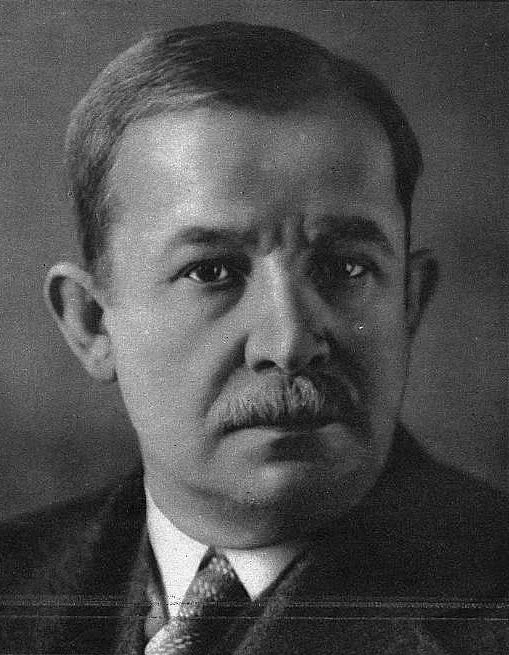
Wojciech Korfanty was born on 20 April 1873 in Sadzawki, now part of Siemianowice Śląskie, into a mining family. He grew up with Silesian speech at home and German schooling. His later Polish identification was a conscious political choice, not a simple inference from his family’s language.
Sources for this passage
Korfanty developed a Polish political programme in a region where the Catholic Centre Party held a strong position. He combined journalism with electoral campaigning. In 1903 he won a Reichstag seat and joined the Polish parliamentary group; the following year he entered the Prussian Landtag. His career shows that the dispute over Silesia had a long parliamentary history before the uprisings.
Sources for this passage
- Ślązak i Polak Wojciech Korfanty (1873–1939)W niemieckich parlamentach
The Polish Plebiscite Commissariat was based at the Lomnitz Hotel in Bytom. Korfanty worked to bring together different Polish political groups and lead the voting campaign. He operated under Allied administration, alongside a German commissariat and amid political violence. Being commissioner did not mean exercising state authority over the whole territory.
Sources for this passage
- Ślązak i Polak Wojciech Korfanty (1873–1939)Komisarz plebiscytowy
A politician, journalist and parliamentarian, Korfanty headed the Polish Plebiscite Commissariat. In 1921 he became the uprising’s political leader. He sought both mobilisation and an end to fighting when he considered that necessary for negotiations.
Sources for this passage
- Ślązak i Polak Wojciech Korfanty (1873–1939)Biography: plebiscite and Dyktator powstania; Third: command
- Plebiscyt i III Powstanie Śląskie 1921 rokuBiography: plebiscite and Dyktator powstania; Third: command
As the uprising’s dictator, Korfanty headed the civilian authorities. Maciej Mielżyński assumed military command and was later replaced by Kazimierz Zenkteler. Headquarters were in Szopienice. Insurgent forces were organised into North, East and South groups.
Sources for this passage
- Plebiscyt i III Powstanie Śląskie 1921 rokuPoczątek insurekcji i siły polskie; command change
- Kazimierz Zenkteler „Warwas”Paragraph on June 1921 command appointment
Attempts to end the fighting caused disputes among the uprising’s leaders. In late May and early June a command crisis developed, and some East Group officers challenged Korfanty. The political aim of pressuring the Allies did not always align with commanders’ expectations of further military action.
Sources for this passage
- Plebiscyt i III Powstanie Śląskie 1921 rokuIII etap walk: leadership crisis
After partition Korfanty worked within Christian Democracy and published the newspaper Polonia. His conflict with the Sanacja authorities brought imprisonment and exile. He died on 17 August 1939. Later remembrance made him a symbol, but his biography also includes political disputes and controversy.
Sources for this passage
- Ślązak i Polak Wojciech Korfanty (1873–1939)Introductory assessment; biography: Spory z sanacją, Więzień Brześcia and final sections
- Ślązak i Polak Wojciech Korfanty (1873–1939)Introductory assessment; biography: Spory z sanacją, Więzień Brześcia and final sections
Sources
- Ślązak i Polak Wojciech Korfanty (1873–1939)
Sebastian Rosenbaum; Mirosław Węcki · Instytut Pamięci Narodowej · 2026-04-20
- Ślązak i Polak Wojciech Korfanty (1873–1939)
Sebastian Rosenbaum; Mirosław Węcki · IPN / Przystanek Historia · 2022-08-16
- Plebiscyt i III Powstanie Śląskie 1921 roku
Mirosław Węcki · IPN / Przystanek Historia · 2021-05-03
- Kazimierz Zenkteler „Warwas”
Instytut Pamięci Narodowej / Biogramy
If a source is unavailable, search its title and archival reference with the named institution. A missing document is not replaced with a reconstruction.